Today's
EarthStation1.com 15% (Or More!) Off Commemorative Memorial Title:
TV Commercials: The Classics Vol. 2 DVD, Video Download, USB Drive
>BR.Today, July 13, 2026
July 13: National Beans 'N' Franks Day:
-- Celebrates the uniqueness of one of America's first invented
comfort foods. It's a basic dish identical to pork and beans,
except that frankfurters are used instead of pork. It's been used
as comfort food for years and is normally served in a casual
atmosphere. National Bean' N' Frank Day is the perfect day, ideal
to make a Beanie Weenie dish for lunch or dinner. Baked beans
debuted in the United States, harkening back to the civil rights
movement. However, the exact origins of the idea of combining
sausages and baked beans remain uncertain. This food combo was
available in cans in the 1980s. Baked beans date back to the Civil
War and were among the earliest canned 'convenience meals' to
appear in the U.S. Van Camp holds the trademark for Beanee Weenee
and produces a canned version. Other brands, such as Franks &
Beans, are sold under different names. In the canned-foods sector,
Gilbert Van Camp is regarded as a trendsetter. He began
experimenting with canning in 1862, and by 1863 he was
successfully preserving fruits and vegetables for the winter. Soon
after, he landed a lucrative contract to supply Union troops
during the Civil War, when his pork and beans became a popular
dish. As a result, the Van Camp Packing Company was formed in
1882, and his son Frank Van Camp is credited with inventing the
now-famous pork and beans in tomato sauce dish in 1894. By 1898,
the Van Camp Packing Company produced six million cans per year.
Indiana had become the nation's biggest producer of canned baked
beans by 1909, thanks to the Van Camp family's enterprise. The
franks are chopped into bite-sized pieces before being put into
the beans. While Beans and Frank's are considered a single phrase,
Van Camp's owns the Beanie Weenies trademark. The origins of this
holiday are a mystery. On Sale Until Midnight Tonight PT!
https://store.earthstation1.com/tv-commercials-the-classics-vol-2-dv2.html
Today's
EarthStation1.com 15% (Or More!) Off Commemorative Memorial Title:
George Lucas: Heroes Myths And Magic Documentary DVD MP4 USB Drive
>BR.Today, July 13, 2026
July 13: Embrace Your Geekness Day: --
From Dungeons and Dragons to Aquaman, if you're into any sort of
fandom and not afraid to show it, then today's the day to dust off
your wizarding robes, set your phasers to stun, collect those Poke
Balls, and charge up your lightsabers! No fan is greater or more
creative than that of any fantasy land, and today is about
embracing your love for your favorite fandoms. Once upon a time,
geekiness may have been something popularly frowned upon, a time
when self-proclaimed nerds would shutter away their comic books
and wizarding capes in the hopes that they wouldn't live to see
another day when their glasses needed taping. And while geekness
may have been a social taboo in the past, today, it has become a
symbol of creativity and passion! The term 'geek' was used to
refer to circus performers in the Victorian age. Before that, a
geek was simply a 'freak' as used in the English language or a
'fool' in German. These oddballs were put on display in traveling
geek shows and circuses where they would eat the head off of a
live chicken or snake. It wasn't until the mid- to late 20th
century that the term 'geek' arose as we know it today: someone
who is fanatic about the fantasy worlds of superheroes and/or
magic. And while those who were openly geekish used to be the
victims of swirlies and being shoved into lockers, today, the term
has become popularly and warmly embraced as more and more people
reveal themselves to be even a little bit geeky. While the
specific origins of the holiday are unknown, Embrace Your Geekness
Day was founded by Wellcat Holidays to celebrate all things geek.
Rather than allow geeks to suffer for their devoted love of
warlocks and wizards, superheroes and supervillains, Embrace Your
Geekness Day is a chance to celebrate the inner geek in all of us.
On Sale Until Midnight Tonight PT!
https://store.earthstation1.com/george-lucas-heroes-myths-and-magic-documentary-dvd-mp4-usb-driv4.html
Today's
EarthStation1.com 15% (Or More!) Off Commemorative Memorial Title:
The Temple In Jerusalem & The Ark Of The Covenant MP4 Download
DVD
>BR.Today, July 13, 2026
July 13, 587 BC: Jerusalem: The History Of Jerusalem: Religion: The History Of Religion: Abrahamic Religions: Judaism: The History Of Judaism: The History Of Israel: The Kingdeom Judah: The History Of The Kingdom Of Judah: The Jewish-Babylonian War (Judah's Revolts Against Babylon) (601-586 BC): Sieges Of Jerusalem: The Siege Of Jerusalem (587 BC): -- Nebuchadnezzar II of Babylon's siege of the city of Jerusalem ends following the destruction of the city and of Solomon's Temple, during the summer of 587 BC according to biblical scholar William F. Albright, or 586 BC according to Old Testament (Hebrew Bible) professor Edwin R. Thiele. In 2004, Rodger Young published an analysis in which he identified 587 BC for the end of the siege, based on details from the Bible and neo-Babylonian sources for related events. Whereas the Nebuchadnezzar Chronicle (also known as the Jerusalem Chronicle), one of the series of Babylonian Chronicles written during Nebuchadnezzar's reign, provides information about the Siege Of Jerusalem in 597 BC, the only known records of the siege that culminated in Jerusalem's destruction are found in the Hebrew Bible (Old Testament). According to the Biblical narrative, Solomon's Temple, also known as the First Temple, was a temple in Jerusalem (Hebrew: Beit Ha-Miqdash) built under King Solomon's reign and completed in 957 BCE. The Temple was looted and then destroyed in 586/587 BCE at the hands of the Babylonian king Nebuchadnezzar II, who also deported the Jews to Babylon. The destruction of the temple and the deportation were seen as fulfillments of prophecy and strengthened Judaic religious beliefs. The Hebrew Bible (Old Testament) describes how Solomon's father, David, the great warrior king, united the Israelite tribes, captured Jerusalem and brought the Israelites' central artifact, the Ark of the Covenant, into the city. David chose Mount Moriah in Jerusalem as the site for a future temple to house the Ark, today known as the Temple Mount or Haram al-Sharif. However, God would not let him build the Temple, for he had "shed much blood." Instead, his son Solomon, known for being an ambitious builder of public works, built it. He placed the Ark in the Holy of Holies, the windowless innermost room and most sacred area of the Temple. In the Holy of Holies, God's presence rested. Only the high priest was allowed to enter the room, once per year on the Day of Atonement, carrying the blood of a sacrificial lamb and burning incense. According to the Bible, the Temple not only served as a religious building, but also as a place of assembly for the Israelites. The Jews who had been deported in the aftermath of the Babylonian conquest were eventually allowed to return and rebuild their temple - known as the Second Temple. But the building no longer housed the Ark, as it had disappeared. There is a general agreement that a ritual structure existed on the Temple Mount by the point of the Babylonian Siege Of Jerusalem, however serious doubts remain in attributing it or its construction to Solomon, or any king roughly contemporaneous to his lifetime. Scholars doubt the veracity of the Biblical account as no evidence for the existence of Solomon's Temple has been found and the Temple is not mentioned in extra-Biblical accounts. Artifacts supposedly proving the existence of Solomon's Temple - an ivory pomegranate and a ninth century BCE stone tablet - have turned out to be fakes. Many scholars believe that the inscription on a pottery shard known as Ostracon 18 written around 600 BCE references the Temple in Jerusalem. If so, it would be the only extra-Biblical corroboration of the Temple found. On Sale Until Midnight Tonight PT! https://store.earthstation1.com/teinjearkofc.html
Today's
EarthStation1.com 15% (Or More!) Off Commemorative Memorial Title:
Reaching For The Skies Documentary TV Series DVD, Download, USB
Drive
>BR.Today, July 13, 2026
July 13, 1919: Aviation: The History Of
Aviation: The History Of Military Aviation: Lighter Than Air
Aviation (Lighter-Than-Air-Aviation): The History Of Ballooning:
The History Of Airships (The History Of Dirigibles, The History Of
Dirigible Balloons): The History Of Rigid Airships: R33-Class
Airships: The R.34: -- The British airship R34 lands in Norfolk,
England, completing the first airship return journey across the
Atlantic in 182 hours of flight. Seven days prior, on July 6,
1919, the R34, nicknamed "Tiny" by her crew, landed in
Mineola, New York, after a flight of 108 hours with virtually no
fuel left, completing the first return crossing of the Atlantic
Ocean by an airship, a journey which began on July 2, 1919. The
R34 made her first flight on 14 March 1919 and was delivered to
her service base at East Fortune on 29 May after a 21-hour flight
from Inchinnan. It was then decided to attempt the first return
Atlantic crossing, under the command of Major George Scott. R34
had never been intended as a passenger carrier and extra
accommodation was arranged by slinging hammocks in the keel
walkway. A plate was welded to an engine exhaust pipe to allow for
the preparation of hot food. The crew included Brigadier-General
Edward Maitland and Zachary Lansdowne as the representative of the
US Navy. William Ballantyne, one of the crew members scheduled to
stay behind to save weight, stowed away with the crew's mascot, a
small tabby kitten called "Whoopsie"; they emerged at
2.00 p.m. on the first day, too late to be dropped off. R34 left
Britain on 2 July 1919 and arrived at Mineola, Long Island, United
States, on 6 July after a flight of 108 hours with virtually no
fuel left. As the landing party had no experience of handling
large rigid airships, Major E. M. Pritchard jumped by parachute
and so became the first person to reach American soil by air from
Europe. This was the first East-West aerial crossing of the
Atlantic and was achieved weeks after the first transatlantic
aeroplane flight. The return journey to RNAS Pulham took place
from 10 to 13 July and took 75 hours. Returned to East Fortune for
a refit, R34 then flew to Howden, East Yorkshire, for crew
training. On 27 January 1921 R34 set off on what should have been
a routine exercise. Over the North Sea the weather worsened and a
recall signal sent by radio was not received. Following a
navigational error the craft flew into a hillside on the North
Yorkshire Moors during the night, and the ship lost two
propellers. She went back out to sea using the two remaining
engines and in daylight followed the Humber Estuary back to
Howden. Strong winds made it impossible to get her back into the
shed and she was tied down outside for the night. By the morning
further damage had occurred and R34 was written off and scrapped.
On Sale Until Midnight Tonight PT!
https://store.earthstation1.com/reaching-for-the-skies-entire-aviation-history-tv-series-6-dvd6.html
Today's
EarthStation1.com 15% (Or More!) Off Commemorative Memorial Title:
Eyes On The Prize II: America At The Racial Crossroads DVD MP4 USB
>BR.Today, July 13, 2026
July 13, 1972: Elections: Elections In
The United States: The 1972 United States Presidential Election:
The 1972 United States Democratic National Convention: First
Women: First African Americans: -- Shirley Chisholm is officially
entered into nomination for the U.S. presidency, thereby becaming
both the first woman and first African American to have their name
entered into nomination at a major party convention to be
President of the United States. Shirley Anita Chisholm, American
politician and Presidential Medal Of Freedom recipient who in 1968
became the first black woman elected to the United States Congress
and the first woman or African American nominated for President at
a major party convention (November 30, 1924 - January 1, 2005) was
born in Brooklyn, New York City, to immigrant parents of Guyanese
and Barbaridan descent. She spent a critical portion of her
childhood in Barbados, where her family was from, and would always
consider herself a Barbadian American. Chisholm represented New
York's 12th congressional district, a district centered on
Bedford-Stuyvesant, for seven terms from 1969 to 1983. Back in the
United States, Chisholm studied and worked in early childhood
education, becoming involved in local Democratic party politics in
the 1950s. In 1964, overcoming some resistance because she was a
woman, she was elected to the New York State Assembly. Four years
later she was elected to Congress, where she led expansion of food
and nutrition programs for the poor and rose to party leadership.
In 1972, she became the first black candidate for a major-party
nomination for President of the United States, and the first woman
to run for the Democratic Party's nomination. She retired from
Congress in 1983 and taught at Mount Holyoke College, while
continuing her political organizing. Although nominated for an
ambassadorship in 1993, health issues caused her to withdraw. In
2015, Chisholm was posthumously awarded the Presidential Medal Of
Freedom. On Sale Until Midnight Tonight PT!
https://store.earthstation1.com/eyes-on-the-prize-ii-dvd-set-4-discs-complete-2nd-seri42.html
Today's
EarthStation1.com 15% (Or More!) Off Commemorative Memorial Title:
1960 Democratic & Republican National Conventions DVD MP4 USB
Drive
>BR.Today, July 13, 2026
July 13, 1960: Elections: Elections In
The United States: The 1960 United States Presidential Election:
The 1960 United States Democratic National Convention: -- Day
three of the five-day The 1960 Democratic National Convention in
Los Angeles, California. The convention nominated Senator John F.
Kennedy of Massachusetts for president and Senate Majority Leader
Lyndon B. Johnson of Texas for vice president. In the general
election, the Kennedy-Johnson ticket won an electoral college
victory and a narrow popular vote plurality (slightly over 110,000
nationally) over the Republican candidates Vice President Richard
M. Nixon and UN Ambassador Henry C. Lodge II. Due to its size, the
Biltmore Hotel was selected to serve as the headquarters hotel for
the Democratic National Committee. It also housed command-posts
for the campaigns of the various candidates seeking the
nomination, temporary studio spaces for the television networks,
and workspaces for select print journalists. On Sale Until
Midnight Tonight PT!
https://store.earthstation1.com/1960-democratic-and-republican-national-conventions1960.html
Today's
EarthStation1.com 15% (Or More!) Off Commemorative Memorial Title:
New York City History Documentary Collection MP4 Video Download
DVD
>BR.Today, July 13, 2026
July 13, 1977: Power Outages In The
United States: The New York City Blackout Of 1977: -- Amidst a
time of financial and social turmoil, New York City experiences an
electrical blackout lasting nearly 24 hours that leads to
widespread fires and looting. The New York City blackout of 1977
was an electricity blackout affecting Consolidated Edison, the
power provider for New York City, that resulted in a power outage
in most of New York City on July 13-14, 1977. The only
neighborhoods in the city that were not affected were in southern
Queens; neighborhoods of the Rockaways, which were part of the
Long Island Lighting Company system; and the Pratt Institute
campus in Brooklyn which operated its own historic power
generator. Unlike other blackouts that affected the region, namely
the Northeast blackouts of 1965 and 2003, the 1977 blackout was
confined to New York City and its immediate surrounding areas.
Also, in contrast to the 1965 and 2003 blackouts, the 1977
blackout resulted in citywide looting and other acts of criminal
activity, including arson. ========= July 13, 2019: Power Outages
In The United States: The Manhattan Blackout Of July 2019: -- The
West Side of Manhattan in New York City experienced a power
failure at approximately 7 p.m. EDT as the result of a transformer
fire. Con Edison is the energy utility serving the area, and they
reported that approximately 73,000 customers were without power,
approximately 1/4 of Con Edison's Manhattan customers. Power was
fully restored by midnight. The power failure occurred on the 42nd
anniversary of the New York City blackout of 1977, which left nine
million customers without power. On Sale Until Midnight Tonight
PT!
https://store.earthstation1.com/new-york-city-history-videos-3-dvd-se3.html
Today's
EarthStation1.com 15% (Or More!) Off Commemorative Memorial Title:
The Occult History Of The Third Reich DVD, Video Download, USB
Drive
>BR.Today, July 13, 2026
July 13, 1527: #BOTD: #HBD! John Dee,
English-Welsh mathematician, astronomer, astrologer, occult
philosopher and ceremonial magician (d. March 26, 1609 (or
December 1608) is #born in Tower Ward, London, one of the 25 wards
of the City of London and which takes its name from its proximity
to the Tower of London, to Rowland Dee, of Welsh descent, and
Johanna, daughter of William Wild. His surname "Dee"
reflects the Welsh "Du" (black). As the trusted court
astrologer and scientific advisor to Queen Elizabeth I, to whom he
was known and referred to as "Agent 007" (which inspired
Ian Fleming to assign his James Bond character this same agent
designation), he devoted much of his life to the study of alchemy,
divination, and Hermetic philosophy. He was also an advocate of
England's imperial expansion into a "British Empire", a
term he is generally credited with coining; in 1577, Dee published
General and Rare Memorials pertayning to the Perfect Arte of
Navigation, a work setting out his vision of a maritime empire and
asserting the need for voyages of exploration to North America in
order to obtain English territorial claims and colonial
establishment in the New World. Dee straddled the worlds of
science and magic just as they were becoming distinguishable. One
of the most learned men of his age, he had been invited to lecture
on the geometry of Euclid at the University of Paris while still
in his early twenties. Dee was an ardent promoter of mathematics
and a respected astronomer, as well as a leading expert in
navigation, having trained many of those who would conduct
England's voyages of discovery. Dee eventually left Elizabeth's
service and went on a quest for additional knowledge in the deeper
realms of the occult and supernatural. He aligned himself with
several individuals who may have been charlatans, travelled
through Europe and was accused of spying for the English crown.
Upon his return to England after six years abroad to find his
Mortlake, London home vandalised, his library ruined and many of
his prized books and instruments stolen. Furthermore, he found
that increasing criticism of occult practices had made England a
still less hospitable place for his magical practices and natural
philosophy. He sought support from his patroness Queen Elizabeth,
who hoped he could persuade Kelley to return and ease England's
economic burdens through alchemy. She finally appointed Dee Warden
of Christ's College, Manchester, in 1595. This former College of
Priests had been re-established as a Protestant institution by
Royal Charter in 1578. However, he could not exert much control
over its fellows, who despised him, or cheated him, or both. Early
in his tenure, he was consulted on the demonic possession of seven
children, but took little interest in the case, although he
allowed those involved to consult his still extensive library. Dee
left Manchester in 1605 to return to London, but remained Warden
until his death. By that time, Queen Elizabeth was dead, and her
successor James I, no friend to Elizabeth or her retinue, no
longer employed Dee as either court astrologer or advisor, and
gave him no support. Dee spent his final years in poverty at
Mortlake, London Borough Of Richmond Upon Thames, Greater London,
forced to sell off various possessions to support himself and his
daughter, Katherine, who cared for him until his death in
Mortlake, aged 81. He is buried in St Mary The Virgin Churchyard
in Mortlake. Both the parish registers and Dee's gravestone are
missing; in light of the previous vandalisms of his person and his
property, the disappearnce of both the parish registers and
gravestone strongly suggest an attempt to damage him, his
reputation and his legacy. In 2013 a memorial plaque to Dee was
placed on the south wall of the present church. Although John Dee,
a liberal and broad-minded individual, had nothing to do with the
politics of occult Nazis centuries later, his work inspired such
occultists, who perverted his magical and ceremonial practices. On
Sale Until Midnight Tonight PT!
https://store.earthstation1.com/the-occult-history-of-the-third-reich-4-part-tv-series-2-dv42.html
Today's
EarthStation1.com 15% (Or More!) Off Commemorative Memorial Title:
In The Beginning: Ancient Egypt w/ Kenneth Clark + Bonus MP4 Or
DVD
>BR.Today, July 13, 2026
July 13, 1903: BOTD: #HBD! Sir Kenneth
Clark, British art historian, museum director and broadcaster
whose expertise covered a wide range of artists and periods, but
he is particularly associated with Italian Renaissance art, most
of all that of Leonardo da Vinci (d. May 21, 1983) is born Kenneth
Mackenzie Clark at 32 Grosvenor Square, London, the only child of
Kenneth Mackenzie Clark and his wife, (Margaret) Alice, daughter
of James McArthur of Manchester. The Clarks were a Scottish family
who had grown rich in the textile trade. After running two art
galleries in the 1930s and 1940s, Kenneth Mackenzie Clark, Baron
Clark came to wider public notice on television, presenting a
succession of programmes on the arts from the 1950s to the 1970s,
the largest and best known being the Civilisation series in 1969.
Clark was introduced to the arts at an early age. Among his early
influences were the writings of John Ruskin, which instilled in
him the belief that everyone should have access to great art.
After coming under the influence of the art experts Bernard
Berenson and Roger Fry, Clark was appointed director of the
Ashmolean Museum in Oxford aged twenty-seven, and three years
later he was put in charge of Britain's National Gallery. His
twelve years there saw the gallery transformed to make it
accessible and inviting to a wider public. During the Second World
War, when the collection was moved from London for safe keeping,
Clark made the building available for a series of daily concerts
which proved a celebrated morale booster during the Blitz. After
the war, and three years as Slade Professor of Fine Art at Oxford,
Clark surprised many by accepting the chairmanship of the UK's
first commercial television network. Once the service had been
successfully launched he agreed to write and present programmes
about the arts. These established him as a household name in
Britain, and he was asked to create the first colour series about
the arts, Civilisation, first broadcast in 1969 in Britain and in
many other countries soon afterwards. Among many honours, Clark
was knighted at the unusually young age of thirty-five, and three
decades later was made a life peer shortly before the first
transmission of Civilisation. Three decades after his death, Clark
was celebrated in an exhibition at Tate Britain in London,
prompting a reappraisal of his career by a new generation of
critics and historians. Opinions varied about his aesthetic
judgement, particularly in attributing paintings to old masters,
but his skill as a writer and his enthusiasm for popularising the
arts were widely recognised. Both the BBC and the Tate described
him in retrospect as one of the most influential figures in
British art of the twentieth century. In his last years Clark
suffered from arteriosclerosis. He died at the age of seventy nine
in a nursing home in Hythe, Kent, England after a fall. He is
buried at St Peter and St Paul Churchyard in Saltwood, Kent. On
Sale Until Midnight Tonight PT!
https://store.earthstation1.com/in-the-beginning-ancient-egypt-with-kenneth-clark-mp4-download-or-dvd.html
Today's
EarthStation1.com 15% (Or More!) Off Commemorative Memorial Title:
The French Revolution Series + Irish Rebellion & You Are There
MP4 DVD
>BR.Today, July 13, 2026
July 13, 1793: #DOTD: Jean-Paul Marat,
Swiss-French physician, political theorist, journalist, scientist,
politician and revolutionary, best known for his role as a radical
journalist and politician during the French Revolution (b. May 24,
1743) #dies aged 50 in Paris, France by assassination when
Marie-Anne Charlotte de Corday d'Armont, known simply as Charlotte
Corday, a Girondist sympathizer (a political faction that
campaigned for the end of the monarchy, but then resisted the
spiraling momentum of the Revolution), stabbed him while he was
taking a medicinal bath for his debilitating skin condition with a
five-inch kitchen knife into his chest, where it pierced just
under his right clavicle, opening the brachiocephalic artery,
close to the heart. The massive bleeding was fatal within seconds.
Slumping backwards, Marat cried out his last words to his wife
Simone, "Aidez-moi, ma chere amie!" ("Help me, my
beloved!") and died. He is buried at Saint-Etienne-du-Mont
Church in Paris. In death, Marat became an icon to the Jacobins
(the political faction then in power in revolutionary France which
was responsible for the wave of executions known as The Reign Of
Terro) as a revolutionary martyr, as portrayed in Jacques-Louis
David's famous painting, The Death of Marat, considered to be the
first modernist painting. During her four-day trial, Charlotte
Corday testified that she had carried out the assassination alone,
saying "I killed one man to save 100,000." Four days
later, on July 17, 1793, she was executed by the guillotine in the
Place de Greve wearing the red overblouse denoting a condemned
traitor who had assassinated a representative of the people.
Standing alone in the tumbril amid a large and curious crowd she
remained calm, although drenched by a sudden summer rainfall. Her
body was buried in the Madeleine Cemetery in the 8th
arrondissement of Paris, which was used to dispose of the corpses
of guillotine victims during the French Revolution. The cemetery
was named after Mary Magdalene. In 1847, writer Alphonse de
Lamartine gave Corday the posthumous nickname "L'Ange De
L'Assassinat (French: "The Angel Of Assassination").
Jean-Paul Marat was #born Jean-Paul Mara in Boudry, Prussian
Principality Of Neuchatel, (now The Republic And Canton Of
Neuchatel, a mostly French-speaking canton in western
Switzerland). He became best known for his role as a radical
journalist and politician during the French Revolution. His
journalism became renowned for its fierce tone, uncompromising
stance towards the new leaders and institutions of the revolution,
and advocacy of basic human rights for the poorest members of
society, yet calling for prisoners of the Revolution to be killed
before they could be freed in what became known as the September
Massacres, a wave of killings in Paris and other cities from 2-7
September 1792. He was one of the most radical voices of the
French Revolution. He became a vigorous defender of the
sans-culottes (French: literally "without breeches", the
common people of the lower classes), publishing his views in
pamphlets, placards and newspapers, notably his periodical L'Ami
du peuple (Friend of the People), which helped make him their
unofficial link with the radical, republican Jacobin group that
came to power after June 1793. On Sale Until Midnight Tonight PT!
https://store.earthstation1.com/the-french-revolution-dvd-3-part-tv-documentary-serie3.html
Today's
EarthStation1.com 15% (Or More!) Off Commemorative Memorial Title:
The Divided Union: American Civil War TV Series MP4 Download DVD
Set
>BR.Today, July 13, 2026
July 13, 1863: The American Civil War
(The Civil War, The War Between The States): Conscription:
Conscription In The United States: The Enrollment Act Of 1863 (The
Civil War Military Draft Act): The New York City Draft Riots (July
13-16, 1863) (The Manhattan Draft Riots, Draft Week): -- The
largest civil urban disturbance in American history, the largest
race riot in American history as well, begins on a Monday morning
and continues for four days until Thursday, July 16 in Lower
Manhattan, a public rebellion widely regarded as the culmination
of white working-class discontent generally, and Irish American
discontent particularly, with new laws passed by Congress that
year to draft men to fight in the ongoing American Civil War.
Initially intended to express anger at the draft, the protests
turned into a race riot, with white rioters attacking black people
in violence throughout the city. The riot was tantamount to a
civil war within the city's Irish community, in which
predominately Irish American rioters confronted police, soldiers,
and pro-war politicians who were also largely from the local Irish
immigrant community. The rioters did not want to fight in a Civil
War where wealthier men, who could afford to pay a 300 USD
commutation fee to hire a substitute, were spared from the draft;
at the time a typical laborer's wage was between 1-2 USD a day,
while the commutation fee was the equivalent of 7.1K USD in 2022.
Urban oiir outrage against this policy erupted that summer, not
only in New York City, but in other major northern cities, such as
Newark and Jersey City, New Jersey; Toledo, Ohio; Evansville,
Illinois; and Boston, Massachusetts. Earlier that month, Provost
Marshal for New York Captain Joel B. Erhardt, ordered some
able-bodied men who were erecting a building to report for the
draft. They responded by attacking him with crow bars and forced
him to flee. Though registration and drafting had begun peaceably
earlier in the month at the Provost Marshal's Office, on this date
thousands of workers decided not report for work. Instead, mobs
armed with clubs, knives and other weapons converged on draft
headquarters, where they were joined by thousands of men and women
who left work. Telegraph poles were knocked down to disrupt
communications; the police were swept aside, and the draft
headquarters building was set on fire. The mob then went wild,
resulting in lynchings, 3,000 Blacks homeless, between 1,500 and
2,000 civilians dead (many of them Black) and at least 8000
wounded or maimed for life by a mob of at least 50,000; despite
these statistics, the official death toll was listed at 119-120
people. With the police overwhelmed, and the mayor's house under
guard, President Abraham Lincoln diverted several regiments of
militia and volunteer troops used in the Battle of Gettysburg to
New York city to restore order, with Colonel Fry bringing in
100,000 regular troops, including the entire 8th Indiana Infantry
Regiment. They did not reach the city until the second day of
rioting, by which time the mobs had ransacked or destroyed
numerous public buildings, two Protestant churches, the homes of
various abolitionists or sympathizers, many black homes, and the
Colored Orphan Asylum at 44th Street and Fifth Avenue, which was
burned to the ground. One mob assaulted a platoon of soldiers and
forced them to take cover in a foundry; reinforcements rescued
them by routing the mob with fixed bayonets. The mobs began
smashing and looting stores. They were pursued by soldiers who
fall victim to musket fire from the rooftops. Howitzer artillery
pieces were rushed in and fired on the mob. Eleven of the
ringleaders of the riots were killed. Troops battled in
hand-to-hand combat in stairwells and on rooftops. Conditions in
the city were such that Major General John E. Wool, commander of
the Department of the East, said on July 16 that "Martial law
ought to be proclaimed, but I have not a sufficient force to
enforce it." Following the riot, not one Black worker showed
up for work on New York's docks. Of the hundreds arrested, only 19
were convicted for their roles in the riot. The area's
demographics changed as a result of the riot. One out of every
five Black New Yorkers moved away after the riot. Many black
residents left Manhattan permanently, with many moving to
Brooklyn. By 1865, the black population had fallen below 11,000
for the first time since 1820. On Sale Until Midnight Tonight PT!
https://store.earthstation1.com/the-divided-union-american-civil-war-tv-series-3-dual-layer-dvd3.html
Today's
EarthStation1.com 15% (Or More!) Off Commemorative Memorial Title:
Black Civil Rights Films: African-American History DVD, MP4, USB
Stick
>BR.Today, July 13, 2026
July 13, 1919: White Supremacy:
Terrorism: Anti-Black Racism: Anti-Black Racism In The United
States: Race Riots: Race Riots In The United States: The Nadir Of
American Race Relations (1877/1890 - 1901/1923/1941 [Dates
Disputed]): The First Red Scare: Red Summer: The Longview Race
Riot (July 10-12, 1919): -- On a Sunday, following a white race
riot in Longview and Gregg county, Texas that led to the deaths of
at least 4 men and destroyed the African American housing district
in the town, Texas Governor William P. Hobby declares martial law
in all of Gregg County, placing Brigadier General Robert H. McDill
in command of the soldiers and the rangers. General McDill issued
orders dividing the town into two districts, giving command of one
section to Colonel T.E. Barton, and the other to Colonel H.W.
Peck. Colonel H.C. Smith was placed in command of the Texas
Rangers. McDill ordered a 10:30 PM to 6:00 AM curfew in Longview,
and prohibited groups of three or more people from gathering on
the streets. He ordered the local telephone operators not to place
any long-distance calls, to prevent recruiting of weapons or men
from neighboring towns. He ordered all residents of Longview and
Kilgore to surrender their weapons at the county courthouse in
Longview. Residents were warned that their homes could be
searched, with a severe penalty for concealing firearms. An
estimated 5,000 to 7,000 guns were turned in at the courthouse,
and stored in "scattered locations throughout the building."
General McDill asked the town officials to organize a committee
consisting of local citizens, to work with him and the military
during the emergency. They identified only white businessmen and
other leaders. The committee met on Monday, July 14, at Judge
Bramlette's office and elected the attorney Ras Young as chairman;
it also authorized Judge Bramlette, Sheriff Bodenheim and Young to
communicate with the military. The committee drafted a list of
concerns. They "expressed disapproval" of Jones'
newspaper article and the armed defense of his former home. Their
resolution said, we will not "permit the negroes of this
community and county to in any way interfere with our social
affairs or to write or circulate articles about the white people
of our city or county...." The committee stated their
opposition to the burning of African American property, and took
steps to prevent any more losses. The members commended Governor
Hobby for quickly sending the National Guard and the Texas
Rangers. The Longview Race Riot was a series of violent incidents
in Longview, Texas, between July 10 and July 12, 1919, when whites
attacked black areas of town, killed one black man, and burned
down several properties, including the houses of a black teacher
and a doctor. It was one of the many race riots in 1919 in the
United States during what became known as Red Summer, a period
after World War I known for numerous riots occurring mostly in
urban areas. The riot ended after local and state officials took
actions to impose military authority and quell further violence.
After ignoring early rumors of planned unrest, local officials
appealed to the governor for forces to quell the violence. In a
short time, the Texas National Guard and Texas Rangers sent forces
to the town, where the Guard organized an occupation and curfew.
Some men were shot and numerous black homes and businesses were
burned prior to the arrival of the law enforcement and military
units. One black man was shot and killed by armed whites before
the National Guard occupied the town. No one was prosecuted for
the events, although numerous whites and blacks were arrested. The
black suspects were taken to Austin for their safety; half were
advised against ever returning to Longview. Red Summer was a
period in mid-1919 during which white supremacist terrorism and
racial riots occurred in more than three dozen cities across the
United States, and in one rural county in Arkansas. The term "Red
Summer" was coined by civil rights activist and author James
Weldon Johnson, who had been employed as a field secretary by the
National Association for the Advancement of Colored People (NAACP)
since 1916. In 1919, he organized peaceful protests against the
racial violence. In most instances, attacks consisted of
white-on-black violence. Numerous African Americans fought back,
notably in the Chicago and Washington, D.C., race riots, which
resulted in 38 and 15 deaths respectively, along with even more
injuries, and extensive property damage in Chicago. Still, the
highest number of fatalities occurred in the rural area around
Elaine, Arkansas, where an estimated 100-240 black people and five
white people were killed-an event now known as the Elaine
massacre. The anti-black riots developed from a variety of
post-World War I social tensions, generally related to the
demobilization of both black and white members of the United
States Armed Forces following World War I; an economic slump; and
increased competition in the job and housing markets between
ethnic European Americans and African Americans. The time would
also be marked by labor unrest, for which certain industrialists
used black people as strikebreakers, further inflaming the
resentment of white workers. The riots and killings were
extensively documented by the press, which, along with the federal
government, feared socialist and communist influence on the black
civil rights movement of the time following the 1917 Bolshevik
Revolution in Russia. They also feared foreign anarchists, who had
bombed the homes and businesses of prominent figures and
government leaders. On Sale Until Midnight Tonight PT!
https://store.earthstation1.com/black-civil-rights-films-africanamerican-history-dvd.html
Today's
EarthStation1.com 15% (Or More!) Off Commemorative Memorial Title:
Long Shadows: Civil War Legacy DVD, Video Download, USB Flash
Drive
>BR.Today, July 13, 2026
July 13, 1821: #BOTD: Nathan Bedford
Forrest, Confederate Army general during the American Civil War,
first Grand Wizard of the Ku Klux Klan (d. October 29, 1877) is
#born to a poor settler family in a secluded frontier cabin near
Chapel Hill hamlet, then part of Bedford County, Tennessee, but
now in Marshall County. A cavalry and military commander in the
war, Forrest is one of the war's most unusual figures. Although
less educated than many of his fellow officers, before the war
Forrest had already amassed a fortune as a planter, real estate
investor, and slave trader. He was one of the few officers in
either army to enlist as a private and be promoted to general
officer and corps commander during the war. He created and
established new doctrines for mobile forces, earning the nickname
The Wizard of the Saddle. In their postwar writings, Confederate
President Jefferson Davis and General Robert E. Lee both expressed
their belief that the Confederate high command had failed to fully
use Forrest's talents. Ulysses S. Grant called him "that
devil Forrest." Another Union general, William Tecumseh
Sherman, it is reported, considered him "the most remarkable
man our civil war produced on either side." He was
unquestionably one of the Civil War's most brilliant tacticians.
Without military education or training, he became the scourge of
Grant, Sherman, and almost every other Union general who fought in
Tennessee, Alabama, or Kentucky. Forrest fought by simple rules:
he maintained that "war means fighting and fighting means
killing" and that the way to win was "to get there first
with the most men." His cavalry, which Sherman reported in
disgust "could travel one hundred miles in less time it takes
ours to travel ten," secured more Union guns, horses, and
supplies than any other single Confederate unit. He played pivotal
roles at Fort Donelson, Shiloh, the capture of Murfreesboro, the
Franklin-Nashville campaign, Brice's Cross Roads, and in pursuit
and capture of Streight's Raiders. In April 1864, in what has been
called "one of the bleakest, saddest events of American
military history", troops under Forrest's command at the
Battle of Fort Pillow massacred hundreds of surrendered troops,
composed of black soldiers and white Tennessean Southern Unionists
fighting for the United States. Forrest, who was a Freemason, was
accused of war crimes for the slaughter in the U.S. press, and
this news may have strengthened the United States's resolve to win
the war. However, Sherman investigated the allegations and did not
charge Forrest with any improprieties. Park Ranger Matt Atkinson,
during his lecture on Brice's Crossroads, stated that there were
no orders found in the chain of command, ordering the massacre of
the garrison. Forrest's responsibility for the massacre continues
to be actively debated by historians. He was a pledged delegate
from Tennessee to the New York Democratic national convention of
July 4, 1868. Forrest was an early member of the Ku Klux Klan
(KKK). Historian and Forrest biographer Brian Steel Wills writes,
"While there is no doubt that Forrest joined the Klan, there
is some question as to whether he actually was the Grand Wizard of
the Ku Klux Klan." In the 1990 PBS documentary The Civil War
by Ken Burns, historian Shelby Foote states in Episode 7 that the
Civil War produced two "authentic geniuses": Abraham
Lincoln and Nathan Bedford Forrest. When he expressed his opinion
to one of General Forrest's granddaughters, she replied after a
pause, "You know, we never thought much of Mr. Lincoln in my
family". Foote also made Forrest a major character in his
novel Shiloh, which used numerous first-person stories to
illustrate a detailed timeline and account of the battle. Nathan
Bedford Forrest died reportedly from acute complications of
diabetes at the Memphis, Tennessee home of his brother Jesse, aged
56. His eulogy was delivered by his recent spiritual mentor,
former Confederate chaplain George Tucker Stainback, who declared
in his eulogy: "Lieutenant-General Nathan Bedford Forrest,
though dead, yet speaketh. His acts have photographed themselves
upon the hearts of thousands, and will speak there forever."
Forrest's funeral procession was over two miles long. The crowd of
mourners was estimated to include 20,000 people. According to
Forrest biographer Jack Hurst, writers present at the public
viewing of Forrest's body and the funeral procession noted many
black citizens among them. Forrest was buried at Elmwood Cemetery
in Memphis. In 1904, the remains of Forrest and his wife Mary were
disinterred from Elmwood and moved to a Memphis city park that was
originally named Forrest Park in his honor but has since been
renamed Health Sciences Park. On July 7, 2015, the Memphis City
Council unanimously voted to remove the statue of Forrest from
Health Sciences Park, and to return the remains of Forrest and his
wife to Elmwood Cemetery. However, on October 13, 2017, the
Tennessee Historical Commission invoked the Tennessee Heritage
Protection Act of 2013 and U.S. Public Law 85-425: Sec. 410 to
overrule the city. Consequently, Memphis sold the park land to
Memphis Greenspace, a non-profit entity not subject to the
Tennessee Heritage Protection Act, which immediately removed the
monument. On Sale Until Midnight Tonight PT!
https://store.earthstation1.com/long-shadows-dvd-legacy-of-the-american-civil-war.html
Today's
EarthStation1.com 15% (Or More!) Off Commemorative Memorial Title:
The American Documents: The Legendary West w Ben Johnson DVD
Download
>BR.Today, July 13, 2026
July 13, 1882: #DOTD: Johnny Ringo,
American Old West gunman and outlaw loosely associated with the
Cochise County Cowboys in frontier boomtown Tombstone, Arizona
Territory, partial namesake inspiration for the stage name of
Beatles drummer Ringo Starr (b. May 3, 1850) #dies at Chiricahua
Range, Cochise County, Arizona Territory aged 32 by suicide under
controversial circumstances. During Tombstone's Fourth of July
festivities, Ringo drank heavily. He left town two days later,
taking several bottles of liquor for the ride. Deputy Billy
Breakenridge saw him two days later near Dial's Ranch in the South
Pass of the Dragoon Mountains. He later wrote that "Ringo was
very drunk, reeling in the saddle." He encouraged Ringo to
follow him back to the Goodrich Ranch, but "he was drunk and
stubborn and went on his way. I think this was the last time he
was seen alive." At about 3pm on July 13, ranch hands at a
nearby ranch heard a shot. Teamster James Yoast was hauling wood
when he found Ringo's body on July 14 seated in "a bunch of
five large black jack oaks growing up in a semicircle from one
root, and in the center of them was a large flat rock which made a
comfortable seat." He was "not more than 700 feet from
Smith's house" in West Turkey Creek Valley, near Chiricahua
Peak in Arizona Territory. His body had already turned black from
the desert heat. His feet were wrapped in strips of cloth torn
from his undershirt. Ringo had lost his horse with his boots tied
to the saddle. The coroner's report noted that "He had
evidently traveled but a short distance in this foot gear."
There was a bullet hole in his right temple and an exit wound at
the back of his head. The fatal wound was upward at a 45-degree
angle between the right eye and ear. His revolver was still in his
right hand. According to the coroner's report, Ringo's Colt Single
Action Army .45 revolver held five cartridges; the hammer rested
on the empty chamber. A knife cut was found at the base of his
scalp, as if "someone had cut it with a knife." His
horse was found eleven days later about 2 miles (3.2 km) away with
Ringo's boots still tied to the saddle. A coroner's inquest
officially ruled his death a suicide. Ringo's body is buried near
the base of the tree where it was discovered. The grave is located
on private land. A gate on a nearby road permits visitors to view
the site. Despite the coroner's ruling and contemporaneous
newspaper reports that Ringo had "frequently threatened to
commit suicide, and that the event was expected at any time",
alternative theories of doubtful plausibility about Ringo's death
have been proposed over the years. Modern writers have advanced
various theories attributing his death to Wyatt Earp, Doc
Holliday, Frank Leslie or Michael O'Rourke. Some assert that the
lack of a powder burns on his head suggest he was shot from a
distance. The coroner's jury report does not mention the presence
or absence of powder burns. Furthermore, Ringo's body was already
turning black due to decomposition. Robert Boller, a member of the
coroner's jury, wrote in 1934, "I showed [James Yoast] where
the bullet had entered the tree on the left side. Blood and brains
[were] oozing from the wound and matted his hair. There was an
empty shell in the six-shooter and the hammer was on that. I
called it a suicide fifty-two years ago, I am still calling it
suicide. I guess I'm the last of the coroner's jury." Johnny
Ringo was born John Peters Ringo in Greens Fork, Indiana. He took
part in the Mason County War in Texas during which he committed
his first murder. He was arrested and charged with murder. He was
affiliated with Cochise County Sheriff Johnny Behan, Ike Clanton,
and Frank Stilwell during 1881-1882. He got into a confrontation
in Tombstone with Doc Holliday and was suspected by Wyatt Earp of
having taken part in the attempted murder of Virgil Earp and the
ambush and death of Morgan Earp. On Sale Until Midnight Tonight
PT!
https://store.earthstation1.com/the-american-documents-the-legendary-west-w-ben-johnson-dvd-download.html
Today's
EarthStation1.com 15% (Or More!) Off Commemorative Memorial Title:
Firing Line Special: The Kennedy-Macmillan Relationship DVD, MP4,
USB
>BR.Today, July 13, 2026
July 13, 1962: The United Kingdom: The
History Of The United Kingdom: Governments Of The United Kingdom:
Prime Ministers Of The United Kingdom: The Premierships Of Harold
Macmillan: Cabinet Reshuffles (Reshuffles): The Night Of The Long
Knives (1962): -- In an unprecedented action, British Prime
Minister Harold Macmillan dismisses seven members of his Cabinet,
one-third of the total, marking the effective end of the National
Liberals as a distinct force within British politics. The speed
and scale of the reshuffle caused it to be associated by its
critics with the 1934 Night Of The Long Knives in Nazi Germany.
The reshuffle took place against a backdrop of declining
Conservative popularity in Britain. Conservative candidates fared
poorly in several by-elections, losing ground to Liberal
candidates. Concerned that traditional Conservative voters were
expressing their disapproval with the government's economic
policies by switching to the Liberals, Harold Macmillan planned to
replace his Chancellor of the Exchequer, Selwyn Lloyd, with
Reginald Maudling. Lloyd had already clashed with Macmillan over
his economic strategies, and Maudling was considered to be more
amenable to the economic policies Macmillan wished to implement.
The reshuffle was also an attempt to reinvigorate the party,
bringing in younger and more dynamic figures and replacing some of
the older and less capable ministers. After discussions with
Conservative Party chairman Iain Macleod and Home Secretary Rab
Butler, a reshuffle was planned for Autumn 1962. Macmillan was
overtaken by events when Butler leaked the details of the
reshuffle to press baron Lord Rothermere over lunch on 11 July.
The newspapers reported the impending changes on 12 July, and
Macmillan made the decision to press ahead with the reshuffle at
once. Lloyd was called to a meeting that evening and dismissed.
The remaining six were informed the following day, 13 July.
Macmillan faced sharp criticism over the scale of the changes, and
his political opponents both within the Conservative Party and in
the Opposition characterised him as ruthless and opportunistic.
Despite an initial sharp drop in his approval ratings, opinion
eventually swung back in his favour and the Party recovered.
Macmillan regretted the way the reshuffle was carried out, and was
particularly concerned about his treatment of Lloyd, who was a
loyal confidant. Despite the dramatic changes in the Cabinet, the
Conservatives were rocked by a series of scandals in 1963 and
Macmillan retired in October of that year after being misdiagnosed
with cancer. He was replaced as Prime Minister by Sir Alec
Douglas-Home, who was defeated in the 1964 general election. On
Sale Until Midnight Tonight PT!
https://store.earthstation1.com/firing-line-special-the-kennedymacmillan-relationship-dvd-mp4-usbht4.html
Today's
EarthStation1.com 15% (Or More!) Off Commemorative Memorial Title:
Watergate: The Secret Story With Mike Wallace DVD MP4 USB Flash
Drive
>BR.Today, July 13, 2026
July 13, 1973: Scandals: Political
Scandals: Political Scandals Of The United States: Richard Nixon:
The Presidency Of Richard Nixon: The Watergate Scandal: The Nixon
White House Tapes: -- Alexander Butterfield, Deputy Assistant To
The President, reveals the existence of the "Nixon Tapes"
to the special Senate committee investigating the Watergate
break-in. As deputy assistant to the president, Butterfield was
the chief assistant of White House Chief Of Staff H. R. Haldeman.
His first few days in the White House were difficult. Butterfield
did not meet the president for 13 days. When Haldeman finally
introduced Butterfield to Nixon, their meeting was short and
awkward. Haldeman then left for California, leaving Butterfield in
charge of the White House staff for four days. During the second
meeting with Butterfield, Nixon was rude and condescending, and
Butterfield nearly resigned. The following day, however, Nixon was
cordial and witty, and Butterfield resolved to stay at the White
House. Butterfield, who came to like Nixon immensely,
nevertheless, felt the president was an "ignorant boor, a
bumpkin". Initially, when meeting with Nixon, Butterfield had
to mimic Haldeman's mannerisms and to duplicate his managerial
style. Everything Haldeman and Butterfield did was designed to
make Nixon feel comfortable and relaxed, never surprised or
"spooked". " If you don't do things exactly as I
do, it could upset [Nixon]," Haldeman told him. Next to
Haldeman, Butterfield was the most powerful aide in the White
House. Butterfield also oversaw installation of the taping system
which Nixon ordered for the White House. On February 10, 1971,
Haldeman's assistant, Lawrence Higby, told Butterfield that
president Nixon wanted a voice-activated audio taping system
installed in the Oval Office and on White House telephones. The
goal, Nixon said, was to create a more accurate record of events.
Butterfield worked with the Secret Service to install five hidden
microphones in Nixon's desk in the Oval Office, two in lamps on
the mantel over the fireplace, two in the cabinet room, and on all
telephone lines in the Lincoln Sitting Room and Oval Office.
According to Butterfield, the system was highly secret, its
existence known only to Nixon, Haldeman, Higby, and the three or
four Secret Service technical staffers who installed it. In April
1971, Nixon ordered the taping system installed in his private
office in the Executive Office Building. In March 1973,
Butterfield was confirmed as administrator of the Federal Aviation
Administration, and left the White House. Butterfield was
questioned by Senate Watergate Committee staff Scott Armstrong, G.
Eugene Boyce, Marianne Brazer, and Donald Sanders (deputy minority
counsel) on Friday, July 13, 1973, in a background interview prior
to his public testimony before the full committee. The critical
line of questioning was conducted by Donald Sanders. Armstrong had
given a copy of Special White House Counsel for Watergate
Buzhardt's report to Butterfield; now Sanders asked if the
quotations in it might have come from notes. Butterfield said no,
that the quotations were too detailed. In addition, Butterfield
said that neither staff nor the president kept notes of one-on-one
private meetings with Nixon. When asked where the quotations might
have come from, Butterfield said he did not know. Then Sanders
asked if there was any validity to John Dean's hypothesis that the
White House had taped conversations in the Oval Office.
Butterfield replied, "I was wondering if someone would ask
that. There is tape in the Oval Office." Butterfield then
told the investigators that, while he had hoped that no one would
ask about the taping system, he had previously decided he would
disclose its existence if asked a direct question. Butterfield
then testified extensively about when the taping system was
installed and how it worked, and told the staff members,
"Everything was taped ... as long as the President was in
attendance. There was not so much as a hint that something should
not be taped." Butterfield later said that he assumed the
committee knew about the taping system, since they had already
interviewed Haldeman and Higby. All present recognized the
significance of this disclosure, and, as former political adviser
to President Gerald Ford, James M. Cannon put it, "Watergate
was transformed". Butterfield's testimony lasted from 2 PM to
6:30 PM. The four investigators swore themselves to secrecy, and
agreed to tell only the Chief Counsel and Chief Minority Counsel
to the Senate Watergate Committee. Chief Counsel Samuel Dash says
he immediately informed his subordinate, Deputy Chief Counsel
Rufus L. Edmisten, and then Democratic Senator Sam Ervin, chairman
of the committee. Both Ervin and Dash realized how important it
was politically to have had a Republican uncover the taping
system. That same night, Ervin asked Dash to have Butterfield
testify on Monday, July 16. On Sale Until Midnight Tonight PT!
https://store.earthstation1.com/watergate-the-secret-story-with-mike-wallace-dvd-mp4-usb-flash-driv4.html
Today's
EarthStation1.com 15% (Or More!) Off Commemorative Memorial Title:
Hollywood (1980) Silent Movie History Series DVD, Video Download,
USB
>BR.Today, July 13, 2026
July 13, 1923: Film (Motion Pictures):
The History Of The Film Industry (The History Of The Motion
Picture Industry): Hollywood: Landmarks: Hollywood Landmarks:
Cultural Icons: Hollywood Cultural Icons: The Hollywood Sign (The
Hollywoodland Sign): -- The Hollywood Sign, which originally read
"HOLLYWOODLAND" is dedicated in the Hollywood Hills, Los
Angeles. The Hollywood Sign is an American landmark and cultural
icon overlooking Hollywood, Los Angeles, California. It is
situated on Mount Lee, above Beachwood Canyon in the Santa Monica
Mountains. Spelling out the word "HOLLYWOODLAND" in
50-foot-tall white uppercase letters and 450 feet long, it was
originally erected as a temporary advertisement for a local real
estate development. Due to increasing recognition the sign was
left up, with the last four letters "LAND" removed in
1949. The Sign was entirely replaced in 1978 with a more durable
all-steel 45-foot-tall (13.7 m) structure and concrete footings.
Among the best-known landmarks in both California and the United
States, the sign makes frequent appearances in popular culture,
particularly in establishing shots for films and television
programs set in or around Hollywood. Signs of similar style, but
spelling different words, are frequently seen as parodies. The
Hollywood Chamber of Commerce holds, for certain uses, trademark
rights to a wordmark of staggered typeface that mimics the
physical Hollywood Sign, but it does not hold rights to the actual
Sign or Walk of Fame. Filmmakers benefit from knowing that the
Chamber does not hold any rights in USTPO Class 41; entertainment.
Because of its widespread recognizability, the sign has been a
frequent target of pranks and vandalism across the decades. It has
since undergone restoration, including the installation of a
security system to deter mischief. The Hollywood Sign Trust, which
is controlled by the Hollywood Chamber, is a volunteer
organization dedicated to maintaining, protecting and promoteing
the Sign, but has no legal rights to the landmark itself, or the
surrounding land, which is part of Griffith Park. Visitors can
hike to the sign from the Bronson Canyon entrance to Griffith Park
or from Griffith Observatory. There is also a trailhead near the
Lake Hollywood Reservoir outside of Griffith Park, and although
not an access point in itself, there is a popular scenic vista
point around Lake Hollywood Park near the trailhead. On Sale Until
Midnight Tonight PT!
https://store.earthstation1.com/hollywood-1980-tv-documentary-series-13-shows-4-dual-lay1980134.html
Today's
EarthStation1.com 15% (Or More!) Off Commemorative Memorial Title:
Television: A History Of Broadcast TV DVD MP4 Download USB Drive
>BR.Today, July 13, 2026
July 13, 1913: #BOTD: #HBD! Dave
Garroway, American broadcast journalist, radio announcer, actor
and television personality, founding host and anchor of NBC's
Today news and talk morning television show from 1952 to 1961 (d.
July 21, 1982) is #born David Cunningham Garroway in Schenectady,
New York into a family of Scottish desecent. His easygoing and
relaxing style belied a lifelong battle with depression. Garroway
has been honored for his contributions to radio and television
with a star both on the Hollywood Walk of Fame and the St. Louis
Walk of Fame, the city where he spent part of his teenaged years
and early adulthood. Dave Garroway died at his Swarthmore,
Pennsylvania of a self-inflicted shotgun wound, aged 69. No
suicide note was found and Garroway's nurse did not recall him
being unusually depressed in the final day of his life. Garroway's
son Michael said that his father had been experiencing from staph
infection complications contracted during a 1981 open heart
operation, along with drug rehabilitation for an amphetamine
addiction, and that he had "unfortunately succumbed to the
traumatic effects of his illness". In addition, he was
extremely depressed at his inability to resurrect a TV career,
saying to friends and family "I'm old hat, old news. Nobody
wants old Dave anymore." His family held a private graveside
service for him in Philadelphia on July 28. Garroway is buried in
West Laurel Hill Cemetery, Bala Cynwyd, Pennsylvania. On Sale
Until Midnight Tonight PT!
https://store.earthstation1.com/television-1988-tv-documentary-series-8-shows-4-dual-laye198884.html
Today's
EarthStation1.com 15% (Or More!) Off Commemorative Memorial Title:
DJ Madness! 1950s-60s-70s Radio Shows DVD, MP3 Download, USB Drive
>BR.Today, July 13, 2026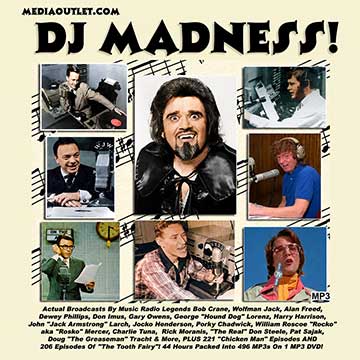
July 13, 1928: #BOTD: Bob Crane, American
actor, drummer, radio host, and disc jockey, best known for his
performance as Colonel Robert E. Hogan in the CBS sitcom Hogan's
Heroes (d. June 29, 1978) #born Robert Edward Crane in Waterbury,
Connecticut. A drummer starting at eleven years of age, Crane
began his career as a radio personality, first in New York and
then Connecticut before moving to Los Angeles where he hosted the
number-one rated morning show. In the early 1960s, he moved into
acting. Crane is best known for his performance as Colonel Robert
E. Hogan in the CBS sitcom Hogan's Heroes. The series aired from
1965 to 1971, and Crane received two Primetime Emmy Award
nominations for his work on the series. After Hogan' Heroes ended,
Crane' career declined. He became frustrated with the few roles he
was being offered and began doing dinner theater. In 1975, he
returned to television in the NBC series The Bob Crane Show. The
series received poor ratings and was cancelled after 13 weeks.
Afterwards, Crane returned to performing in dinner theaters and
also appeared in occasional guest spots on television. While on
tour for his play Beginner' Luck in June 1978, Crane was found
bludgeoned to death in his Scottsdale, Arizona apartment. He is
buried at Westwood Memorial Park in Westwood, Los Angeles County,
California This suspicious nature of his death and later
revelations about his personal and sexual life gradually changed
Crane's posthumous image from a cultural icon to a controversial
figure. On Sale Until Midnight Tonight PT!
https://store.earthstation1.com/dj-radio-airchecks-mp3-dvd-1950s60s70s-dis319506070.html
Today's
EarthStation1.com 15% (Or More!) Off Commemorative Memorial Title:
Medium Cool (1969) News Media & The 1968 DNC DVD, Download,
USB Drive
>BR.Today, July 13, 2026
July 13, 1941: #BOTD: #HBD! Robert Forster, American actor, best known for his roles as John Cassellis in Medium Cool (1969), Captain Dan Holland in The Black Hole (1979), Abdul Rafai in The Delta Force (1986), and Max Cherry in Jackie Brown (1997), for which he was nominated for the Academy Award for Best Supporting Actor (d. October 11, 2019) is #born Robert Wallace Foster Jr. in Rochester, New York; Forster added an "R" to his surname as there was another member of the Screen Actors Guild named Robert Foster. His mother was Italian American, while his father was of English and Irish descent. Forster's varied filmography includes: Reflections in a Golden Eye (1967), Alligator (1980), Me, Myself & Irene (2000), Mulholland Drive (2001), The Descendants (2011), Olympus Has Fallen (2013), London Has Fallen (2016), What They Had (2018), and The Wolf of Snow Hollow (2020). He also had prominent roles in television series such as Banyon (1971-1973), Heroes (2007-2008), Twin Peaks (2017) and the Breaking Bad episode "Granite State" as Ed Galbraith, for which he won the Saturn Award for Best Guest Starring Role on Television. He reprised the role in the film El Camino: A Breaking Bad Movie (2019) and Better Call Saul (2020). Robert Forster was diagnosed in June 2019 with a brain tumor, and he died from the disease at his home in Los Angeles at the age of 78. His remains were cremated, and his ashes scattered at sea, the location of which is not publicly disclosed. On Sale Until Midnight Tonight PT! https://store.earthstation1.com/medium-cool-dvd.html
Today's
EarthStation1.com 15% (Or More!) Off Commemorative Memorial Title:
To Boldly Go... Voyager Program w/ Patrick Stewart DVD, Download,
USB
>BR.Today, July 13, 2026
July 13, 1940: #BOTD: #HBD! Patrick
Stewart, English actor, director, and producer known for his work
in various stage, television, film and video games in a career
spanning six decades is #born in Mirfield, in the West Riding of
Yorkshire, England. Sir Patrick Stewart OBE has been nominated for
Olivier, Tony, Golden Globe, Emmy, Screen Actors Guild, and Saturn
Awards. Beginning his career with a long run as a member of the
Royal Shakespeare Company, Stewart received the 1979 Laurence
Olivier Award for Best Actor in a Supporting Role for his
performance in Antony and Cleopatra in the West End. Stewart's
first major screen roles were in BBC-broadcast television
productions during the mid-late 1970s, including Hedda, and the I,
Claudius miniseries. From the 1980s onward, Stewart began working
in American television and film, with prominent leading roles such
as Captain Jean-Luc Picard in Star Trek: The Next Generation, its
subsequent films, and 2020's Star Trek: Picard; as Professor
Charles Xavier in the X-Men series of superhero films; the lead of
the Starz TV series Blunt Talk; and voice roles such as CIA Deputy
Director Avery Bullock in American Dad! and the narrator in Ted.
Having remained with the Royal Shakespeare Company, in 2008
Stewart played King Claudius in Hamlet in the West End and won a
second Olivier Award. In 1993, TV Guide named Stewart the Best
Dramatic Television Actor of the 1980s. He received a star on the
Hollywood Walk of Fame on December 16, 1996. In 2010, Stewart was
knighted by Queen Elizabeth II for services to drama. On Sale
Until Midnight Tonight PT!
https://store.earthstation1.com/to-boldly-go-dvd-voyager-space-probe-project-patrick-stewart.html
Today's
EarthStation1.com 15% (Or More!) Off Commemorative Memorial Title:
Journey To Shiloh (1968) DVD, MP4 Video Dowload, USB Flash Drive
>BR.Today, July 13, 2026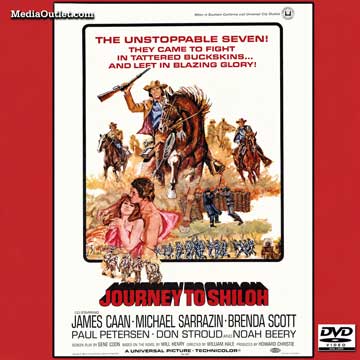
July 13, 1942: #BOTD: #HBD! Harrison
Ford, American actor, film producer, pilot, and environmental
activist is #born at the Swedish Covenant Hospital in Chicago,
Illinois, the son of former radio actress Dorothy (nee Nidelman)
Ford and advertising executive and former actor John William
"Christopher" Ford. His father was a Catholic of Irish
and German descent, while his mother was an Ashkenazi Jew, whose
parents were emigrants from Minsk, Belarus. When asked in which
religion he and his brother were raised, Ford jokingly responded
"Democrat" and more seriously stated that they were
raised to be "liberals of every stripe". When asked
about what influence his Jewish and Irish Catholic ancestry may
have had on him, he quipped, "As a man I've always felt
Irish, as an actor I've always felt Jewish." As of 2019, the
U.S. domestic box office grosses of his films total over 5.1B USD,
with worldwide grosses surpassing 9.3B USD placing him at No. 4 on
the list of highest-grossing domestic box office stars of all
time. In addition to his box office success, he is also an Academy
Award nominee, a four-time Golden Globe nominee, a three-time
Saturn Award winner, and the recipient of the AFI Life Achievement
Award and the Cecil B. DeMille Award. Following the initial part
of his career in bit parts and supporting roles, Ford gained
worldwide fame for his starring role as Han Solo in the epic space
opera film Star Wars (1977), reprising the role in four sequels
over the course of the next 42 years. He is also widely known for
his portrayal of Indiana Jones in the titular film franchise,
beginning with the action-adventure film Raiders of the Lost Ark
(1981), and for playing other characters in different franchises,
most notably Rick Deckard in the dystopian science fiction films
Blade Runner (1982) and Blade Runner 2049 (2017) and the Tom
Clancy character Jack Ryan in the spy thriller films Patriot Games
(1992) and Clear and Present Danger (1994). His career spans six
decades and includes collaborations with some of the most
acclaimed and influential filmmakers of all time such as George
Lucas, Francis Ford Coppola, Steven Spielberg, Ridley Scott, Peter
Weir, Roman Polanski and Mike Nichols. Outside of his franchise
roles, Ford has portrayed heroic characters in other films such as
the thrillers Witness (1985), for which he received his only
Academy Award nomination, The Fugitive (1993), and Air Force One
(1997), as well as the historical sports drama 42 (2013). In
addition to his heroic roles, he played morally ambiguous and
darker characters in films such as the coming-of-age comedy drama
American Graffiti (1973), the conspiracy thriller The Conversation
(1974), the survival drama The Mosquito Coast (1986), the legal
drama Presumed Innocent (1990), and the supernatural suspense
thriller What Lies Beneath (2000). Ford has also appeared in
several romantic comedies and dramas throughout his career,
including Heroes (1977), Working Girl (1988), Sabrina (1995), Six
Days, Seven Nights (1998), Random Hearts (1999), Morning Glory
(2010), and The Age of Adaline (2015). He is married to actress
Calista Flockhart. On Sale Until Midnight Tonight PT!
https://store.earthstation1.com/journey-to-shiloh-dvd-1968-james-caan-michael-sarrazin-civil1968.html
Today's
EarthStation1.com 15% (Or More!) Off Commemorative Memorial Title:
The History Of Jazz A Video Retrospective DVD, MP4 Download, USB
Drive
>BR.Today, July 13, 2026
July 13, 1936: #BOTD: #HBD! Albert Ayler,
African American avant-garde jazz saxophonist, singer and composer
(d. November 25, 1970) is #born in Cleveland, Ohio. After early
experience playing R & B and bebop, Ayler began recording
music during the free jazz era of the 1960s. However, some critics
argue that while Ayler's style is undeniably original and
unorthodox, it does not adhere to the generally accepted critical
understanding of free jazz. In fact, Ayler's style is difficult to
categorize in any way, and it evoked incredibly strong and
disparate reactions from critics and fans alike. His innovations
have inspired subsequent jazz musicians. His trio and quartet
records of 1964, such as Spiritual Unity and The Hilversum
Session, show him advancing the improvisational notions of John
Coltrane and Ornette Coleman into abstract realms where whole
timbre, and not just mainly harmony with melody, is the music's
backbone. His ecstatic music of 1965 and 1966, such as "Spirits
Rejoice" and "Truth Is Marching In", has been
compared by critics to the sound of a brass band, and involved
simple, march-like themes which alternated with wild group
improvisations and were regarded as retrieving jazz's pre-Louis
Armstrong roots. Albert Ayler was found dead in New York City's
East River, a presumed suicide, having disappeared on November 5,
1970, aged 34. For some time afterwards, rumors circulated that
Ayler had been murdered, with a long-standing urban legend that
the Mafia had tied him to a jukebox. He is buried at Highland Park
Cemetery in Highland Hills, Ohio. On Sale Until Midnight Tonight
PT!
https://store.earthstation1.com/the-history-of-jazz-by-billy-taylor-parts-i-amp-ii-dvd.html
Today's
EarthStation1.com 15% (Or More!) Off Commemorative Memorial Title:
TV Music & Dance Shows #1 Hullabaloo DVD, Video Download, USB
Drive
>BR.Today, July 13, 2026
July 13, 1942: #BOTD: #HBD! Roger
McGuinn, American singer, songwriter and guitarist, best known for
being the leader, frontman, lead singer and lead guitarist of the
folk rock band The Byrds, is #born James Joseph McGuinn III in
Chicago, Illinois. Also known as Jim McGuinn, he is a member of
the Rock and Roll Hall of Fame for his work with The Byrds. As a
solo artist he has released 10 albums and collaborated with, among
others, Bob Dylan, Tom Petty and Chris Hillman. The 12-string
Rickenbacker guitar is his signature instrument. He was also part
of an author/musician band, Rock Bottom Remainders, a group of
published writers doubling as musicians to raise proceeds for
literacy charities. In July 2013, McGuinn co-authored an
interactive ebook, Hard Listening, with the rest of the group. On
Sale Until Midnight Tonight PT!
https://store.earthstation1.com/classic-tv-music-amp-dance-shows-1-hullabaloo-dv1.html
Today's
EarthStation1.com 15% (Or More!) Off Commemorative Memorial Title:
Crime Inc.: The True Story Of The Mafia TV Series DVD, MP4, USB
Stick
>BR.Today, July 13, 2026
July 13, 1933: #BOTD: Mickey Spillane,
Irish-American mobster who controlled Hell's Kitchen in New York
in the 1960s and 1970s, known as the "last of the gentleman
gangsters" (d. May 13, 1977) is #born on July 13, 1933 to
Michael Anthony Spillane and Margaret Curran. At 16 or 17, he
attempted to rob a movie theater, but was shot by a police
officer. He spent four years in prison. After his release from
prison, Spillane started as a numbers runner for various organized
crime figures in Hell's Kitchen. In 1960, Mickey took over the
rackets left to him by his predecessor Hughie Mulligan. He married
Maureen McManus, the daughter of the powerful Hell's Kitchen
Democratic district leader Eugene McManus. Though Italian mobsters
dominated organized crime in the city, the Italian mob stayed out
of Hell's Kitchen while Spillane was the boss. Often, Spillane
would kidnap members of the Italian Mafia and hold them for ransom
to raise money for his operations. Although he ran the rackets
such as gambling and loansharking, he never allowed the sale of
drugs. It was Spillane's refusal to allow the Italian mobsters to
participate in the rackets in Hell's Kitchen and along the west
side of Manhattan that led to his downfall. The Jacob K. Javits
Convention Center was being built on Spillane's westside. The
amount of money the new convention center was going to generate
was enormous. Coupled with the amount Spillane was already
generating from Madison Square Garden, the Hudson River waterfront
and the local unions and Spillane would have been powerful enough
to challenge the Italians for control of the city. So began the
infamous Irish-Italian Mob War of 1970s. In the 1970s, under
Spillane, the Irish mob became organized and expanded their
control out of Hell's Kitchen to most of the west side of
Manhattan. The Italian Mafia, seeing this as a threat, demanded
involvement in the soon-to-be-built Jacob K. Javits Convention
Center. The convention center was being constructed in the Chelsea
neighborhood of NYC just south of Hell's Kitchen. Spillane refused
to allow any involvement by the Italians. The Italian gangsters
greatly outnumbered the members of the Irish mob, but Spillane was
successful in keeping control of the convention center. The
Italians, frustrated and embarrassed by their defeat to Spillane
and the Irish gangsters, responded by hiring a rogue
Irish-American hitman named Joseph "Mad Dog" Sullivan to
assassinate Tom Devaney, Eddie "the Butcher" Cummiskey,
and Tom "the Greek" Kapatos, three of Spillane's chief
lieutenants. By the mid-1970s, Spillane had moved his family out
of Hell's Kitchen to Woodside, Queens, because of threats of
violence against his children. In 1966, a young upstart named
Jimmy Coonan began slowly muscling in on Spillane's territory.
Ultimately, Coonan was sent to prison for ten years in 1967 for
homicide. When he was released from prison, Coonan sought to align
himself with the Gambino crime family through an up-and-coming
mobster from Brooklyn, named Roy DeMeo. This would mark the
beginning of the end for the Irish mob, as after Spillane's death,
Coonan would eventually work for the Gambinos. It has long been
rumored that DeMeo murdered Spillane as a favor to Coonan, who
subsequently took over as the boss of the Hell's Kitchen Irish
Mob. Spillane is buried in Calvary Cemetery, Queens, New York.
Spillane had three children. Michael (Mickey), Robert and Denise.
Robert, an actor, fell six stories to his death on July 10, 2010,
in Manhattan, New York, when he leaned against his apartment
window screen. The screen gave way while Robert may have been
calling his brother. The Spillane family own the bar in Hell's
Kitchen called "Mickey Spillane's Hells Kitchen" on 49th
Street and 9th Avenue. Mickey Spillane died at the age of 43 when
he was killed outside his apartment in Woodside, Queens. It has
long been rumored that the DeMeo crew, approximately twenty
associates involved in murder, car theft, drug dealing,
prostitution and pornography headed by Gambino crime family
mobster Roy DeMeo, murdered Spillane as a favor to a young upstart
named Jimmy Coonan, who had begun slowly muscling in on Spillane's
territory in 1966, with Roy DeMeo being the shooter. Coonan took
over as boss of the Westies after Spillane's death until 1988,
when Coonan was incarcerated and began serving a 75-year prison
term. Spillane is buried in Calvary Cemetery, Queens, New York. On
Sale Until Midnight Tonight PT!
https://store.earthstation1.com/crime-inc-the-true-story-of-the-mafia-dvd-set-2-disc2.html
Today's
EarthStation1.com 15% (Or More!) Off Commemorative Memorial Title:
Eric Clapton (1987) Documentary w/ Melvyn Bragg MP4 Video Download
DVD
>BR.Today, July 13, 2026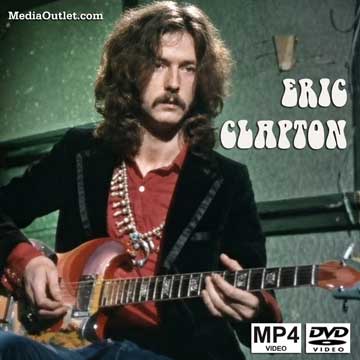
July 13, 1985: Aesthetics: The Performing
Arts: Music: Music History: Music Of The United States: Rock
Concerts: Benefit Concerts (Charity Concerts): Rock Festivals:
Live Aid: -- The Live Aid benefit concert takes place in London
and Philadelphia, as well as other venues such as Moscow and
Sydney. Live Aid was a multi-venue benefit concert held on a
Saturday, as well as a music-based fundraising initiative. The
original event was organised by Bob Geldof and Midge Ure to raise
further funds for relief of the 1983-1985 famine in Ethiopia, a
movement that started with the release of the successful charity
single "Do They Know It's Christmas?" in December 1984.
Billed as the "global jukebox", Live Aid was held
simultaneously at Wembley Stadium in London, attended by about
72,000 people, and John F. Kennedy Stadium in Philadelphia,
attended by 89,484 people. On the same day, concerts inspired by
the initiative were held in other countries, such as the Soviet
Union, Canada, Japan, Yugoslavia, Austria, Australia, and West
Germany. It was one of the largest satellite link-ups and
television broadcasts of all time; an estimated audience of 1.9
billion, in 150 nations, watched the live broadcast, nearly 40
percent of the world population. The impact of Live Aid on famine
relief has been debated for years. One aid relief worker stated
that following the publicity generated by the concert,
"humanitarian concern is now at the centre of foreign policy"
for Western governments. Geldof has said, "We took an issue
that was nowhere on the political agenda and, through the lingua
franca of the planet - which is not English but rock 'n' roll - we
were able to address the intellectual absurdity and the moral
repulsion of people dying of want in a world of surplus." In
another interview he stated that Live Aid "created something
permanent and self-sustaining" but also asked why Africa is
getting poorer. The organisers of Live Aid tried to run aid
efforts directly, channelling millions of pounds to NGOs in
Ethiopia. It has been alleged that much of this went to the
Ethiopian government of Mengistu Haile Mariam - a regime the UK
Prime Minister Margaret Thatcher opposed - and it is also alleged
some funds were spent on guns. The BBC stated in 2010 there was no
evidence money had been diverted, while the former British
Ambassador to Ethiopia, Brian Barder, states, "the diversion
of aid related only to the tiny proportion that was supplied by
some NGOs to rebel-held areas." ========= Performances:
London - Wembley Stadium Performers: -- Status Quo, The Style
Council, The Boomtown Rats, Adam Ant, The Pretenders, Phil Collins
(also performed in Philadelphia via Concorde), Eric Clapton, Bryan
Ferry, U2, Queen, David Bowie, The Who, Elton John, Paul
McCartney, Led Zeppelin (reunion with Phil Collins and Tony
Thompson on drums), Sting, Duran Duran, Spandau Ballet, Culture
Club, Wham! (George Michael and Andrew Ridgeley), Bananarama, Hall
& Oates (joined Mick Jagger on stage), The Temptations (joined
Mick Jagger), The Four Tops (joined Mick Jagger), Mick Jagger
(performed with multiple artists). ||| Philadelphia - JFK Stadium
Performers: -- Led Zeppelin (Phil Collins joined for drums), Black
Sabbath, The Hooters, Joan Baez, Neil Young, Tom Petty and the
Heartbreakers, Crosby, Stills, Nash & Young, Santana, Bob
Dylan, Eric Clapton (also performed in London), Diana Ross, Hall &
Oates, Run-D.M.C., Tina Turner, Neil Sedaka, Phil Collins
(performed in both London and Philadelphia), Led Zeppelin reunion
(with Phil Collins and Tony Thompson). ||| Notable Collaborations
and Highlights: -- Mick Jagger performed with Hall & Oates,
The Temptations, and The Four Tops; Phil Collins famously flew
from London to Philadelphia on the Concorde to perform at both
venues; The finale in London featured a collective performance of
"Do They Know It's Christmas?" with Bob Geldof, Paul
McCartney, David Bowie, and many other artists. ||| International
Satellite-Linked Performances: -- Australia: Oz for Africa
featured INXS, Men at Work, and other local artists. ||| Other
countries: -- Smaller concerts and broadcasts occurred in Canada,
Japan, West Germany, Austria, Yugoslavia, and the Soviet Union. On
Sale Until Midnight Tonight PT!
https://store.earthstation1.com/eric-clapton-1987-documentary-melvyn-bragg-mp4-video-download-dvd.html
Today's
EarthStation1.com #OnThisDay Commemorative Memorial Title: Fibber
McGee And Molly Complete Radio Series MP3 DVD, Download, USB
>BR.Today, July 13, 2026 July 13: National Barbershop Music
Appreciation Day: -- Can you hear many beautiful voices
harmonizing today? They're telling us it's time to celebrate
barbershop music - a style of voice-only, acapella-style music -
this day is not to be confused with another barbershop-themed
event: National Barbershop Quartet Day. People of all ages,
genders, and nationalities come together to perform at various
public or private events, singing melodies across genres. In a pop
culture world, this day is a little slice of nostalgia, beauty,
and authenticity combined. Barbershop music may have originated in
England in the 1600s and has since grown in popularity due to
American influence. Barbers would keep a 'cittern' in their shops
for customers to play while they waited. Some customers eventually
began inventing their sounds, placing pebbles inside tin cans, and
so on, resulting in 'barber's music.' In his now-famous journal,
the famed English naval administrator Samuel Pepys described this
music as 'amateur instrumental music. By the 1830s, this music had
found its way to America, and as the local barbershops were the
preferred haunts for local men, the barbershop music became the
music of the nation. African American culture and their
traditional music took this style of music to another level. Folk
songs and hymns were sung in four parts, leading to the barbershop
music's distinctive style being established. However, this music
only hit its stride in the 1900s, becoming insanely popular by the
1940s. However, the only official organization singing these songs
was all-male. The women whose husbands were part of the male
barbershop music society - Society for the Preservation and
Encouragement of Barber Shop Quartet Singing in America
(S.P.E.B.S.Q.S.A.) - were particularly inspired. They had
first-hand experience of how much fun this style of music could
be. So, on July 13, 1945, Edna Mae Anderson invited the wives of
other S.P.E.B.S.Q.S.A. members to her home in Tulsa, Oklahoma for
a singing session, and the Sweet Adelines was born on that very
day. Today, this organization is one among many barbershop music
groups popularizing this style of music across America and the
globe. Traditional songs are still sung, although barbershop music
now includes more current styles of music - including pop, rock,
and show tunes - to attract a younger audience.
https://store.earthstation1.com/fibber-mcgee-and-molly-mp3-dvd-complete-radio-serie3.html
Today's
EarthStation1.com #OnThisDay Commemorative Memorial Title: The
Making Of A Continent TV Series DVD, MP4 Download, USB Drive
>BR.Today, July 13, 2026July 13: International Rock Day: -- Today
is all about paying tribute to rocks. And no, we are not talking
about extravagant rock music and rock concerts with guitars and a
raving audience - we are talking about literal rocks! Did you know
that rocks are not simply rocks and that all the rocks you know
fall into three categories - igneous, sedimentary and metamorphic?
Did you also know that the study of rocks is known as geology? If
you're a budding geologist and looking to pursue a degree in the
field have a look at these science scholarships. See just how much
there is to know about rocks. That's what makes International Rock
Day so special. Technically, a rock is a naturally occurring solid
aggregate of one or more minerals or mineraloids. Rocks cover the
entire earth - in fact, the earth's outer solid layer, the
lithosphere, is made up of rock and has been put to use by humans
throughout history. Rocks may not seem very important to most
people, but they are essential for the very survival of humans,
and rocks played a part in the human evolution that we are
experiencing today. International Rock Day is a special day to
celebrate and honor this very essence of life. The main aim of
International Rock Day is to raise global awareness about the
importance of rocks and encourage people around the world to learn
more about rocks. There are three basic types of rocks: igneous
rocks, which start deep within the earth as magma or molten rock,
sedimentary rocks, which are weathered into fragments that are
carried away by water, wind, and ice, and metamorphic rocks, which
are essentially igneous or sedimentary rocks that have been
changed by heat and pressure. At a granular level, rocks are
usually composed of grains of minerals, which, in turn, are
homogeneous solids formed from chemical compounds. Unfortunately,
there is no solid history behind the creation of International
Rock Day, and the origination and the creator of this day remain
unknown. Nonetheless, this day needs to be celebrated because of
the usefulness of rocks to mankind. So, happy learning about
rocks!
https://store.earthstation1.com/the-making-of-a-continent-2-dual-layer-dvd-set-all-6-episod26.html
Today's
EarthStation1.com #OnThisDay Commemorative Memorial Title: From
Counterculture To Cults: Subversion Of Hippies DVD MP4 USB Drive
>BR.Today, July 13, 2026July 13: Fool's Paradise Day: -- A day to
forget the worst sides of reality and embrace the fantasy world of
our thoughts; to normalize this and assert the importance of
having a happy place to go to when things get dark and out of
hand. A fool's paradise is a made-up world we imagine, a world
where we can find eternal happiness. Whilst people might make fun
of such thoughts as childish and naive, Fool's Paradise Day is a
day to embrace such a paradise and try to find happiness amidst
all the tension and pressure of the real world. Why do we exist?
We may say that humans are not yet evolved enough to understand
such an intrinsic question, but that does not mean we should not
ponder over it. "What are we?" "What is our
purpose?" and "Who made us?" are a few questions
each of us has asked at some point in our lives. We are not sure
if answers will be found in our lifetime, so we like to dismiss
such complex questions by remarking that the purpose of our entire
life is to find answers to these questions, but that may not be
the entire purpose. When it comes to the matter of purpose, the
first thing that comes to mind is happiness. We do everything for
happiness. Air, water, food, and shelter are important. Being
happy is as important a need. Happiness is an emotion; it is a
state of mind filled with contentment and satisfaction. We don't
usually believe that true happiness can ever be achieved. Life
seems to be one long ride chasing the elusive entity called
'happiness.' If reality is something that slows us down on our
journey towards happiness then there is a cheat we can use to feel
a temporary euphoria. As stated before, happiness is a state of
mind. We can train our minds to find happiness in our thoughts.
That is the origin of the 'fool's paradise.' In our quest to find
true happiness, we can rest in our own thoughts as we define the
parameters of our own happiness. With our imagination, we can
create a paradise in our thoughts. A happy place where we have
everything we ever wanted and needed. Take a day off to create
such a world inside your mind and enjoy some time pondering your
adventure in that fantasy land.
https://store.earthstation1.com/from-counterculture-to-cults-subversion-of-hippies-dvd-mp4-usb-driv4.html
Today's
EarthStation1.com #OnThisDay Commemorative Memorial Title: Day One
(1989) Manhattan Project Docudrama DVD, Download, USB Drive
>BR.Today, July 13, 2026July 13, 1970: #DOTD: #RIP: Leslie
Groves, United States Army Corps of Engineers officer who oversaw
the construction of the Pentagon and directed the Manhattan
Project, a top secret research project that developed the atomic
bomb during World War II (b. August 17, 1896) #dies in the night
of a heart attack caused by chronic calcification of the aortic
valve at Walter Reed Army Medical Center in Washington, D.C., aged
73. A funeral service was held in the chapel at Fort Myer,
Virginia, after which Groves was interred in Arlington National
Cemetery next to his brother Allen, who had died of pneumonia in
1916. Lieutenant General Leslie Richard Groves Jr. was born in
Albany, New York, the son of a U.S. Army chaplain, and lived at
various Army posts during his childhood. In 1918, he graduated
fourth in his class at the U.S. Military Academy at West Point and
was commissioned into the U.S. Army Corps of Engineers. In 1929,
he went to Nicaragua as part of an expedition to conduct a survey
for the Inter-Oceanic Nicaragua Canal. Following the 1931
earthquake, Groves took over Managua's water supply system, for
which he was awarded the Nicaraguan Presidential Medal of Merit.
He attended the Command and General Staff School at Fort
Leavenworth, Kansas, in 1935 and 1936; and the Army War College in
1938 and 1939, after which he was posted to the War Department
General Staff. Groves developed "a reputation as a doer, a
driver, and a stickler for duty" and in 1940 he became
special assistant for construction to the Quartermaster General,
tasked with inspecting construction sites and checking on their
progress. In August 1941, he was appointed to create the gigantic
office complex for the War Department's 40,000 staff that would
ultimately become the Pentagon. In September 1942, Groves took
charge of the Manhattan Project. He was involved in most aspects
of the atomic bomb's development: he participated in the selection
of sites for research and production at Oak Ridge, Tennessee; Los
Alamos, New Mexico; and Hanford, Washington. He directed the
enormous construction effort, made critical decisions on the
various methods of isotope separation, acquired raw materials,
directed the collection of military intelligence on the German
nuclear energy project and helped select the cities in Japan that
were chosen as targets. Groves wrapped the Manhattan Project in
security but failed to prevent the Soviet Union from conducting a
successful espionage program that stole some of its most important
secrets. After the war, Groves remained in charge of the Manhattan
Project until responsibility for nuclear weapons production was
handed over to the United States Atomic Energy Commission in 1947.
He then headed the Armed Forces Special Weapons Project, which had
been created to control the military aspects of nuclear weapons.
He was given a dressing down by the Army Chief Of Staff, General
of the Army Dwight D. Eisenhower, when they met on 30 January 1948
to evaluate Groves' performance. Eisenhower recounted a long list
of complaints about Groves pertaining to his rudeness, arrogance,
insensitivity, contempt for the rules and maneuvering for
promotion out of turn. Eisenhower made it clear that Groves would
never become Chief of Engineers. Groves realized that in the
rapidly shrinking postwar military he would not be given any
assignment similar in importance to the one he had held in the
Manhattan Project, as such posts would go to combat commanders
returning from overseas, so three days after his meeting with
Eisenhower, Groves announced his intention to leave the Army. He
was promoted to lieutenant general on 24 January 1948, just before
his retirement on 29 February 1948 in recognition of his
leadership of the Manhattan Project. By special Act of Congress
his date of rank was backdated to 16 July 1945, the date of the
Trinity nuclear test. He went on to become a vice-president at
Sperry Rand in 1948, and retired at age 65 in 1961.
https://store.earthstation1.com/day-one-dvd-before-hiroshima-and-after-docudrama-2-disc2.html
Today's
EarthStation1.com #OnThisDay Commemorative Memorial Title: A
Canterbury Tale (1944) Eric Portman Sheila Sim DVD, MP4, USB Drive
>BR.Today, July 13, 2026July 13, 1901: #BOTD: #HBD! Eric Portman,
English stage and film actor, best remembered for his roles in
three films for Michael Powell and Emeric Pressburger during the
1940s. 49th Parallel (1941), One of Our Aircraft Is Missing (1942)
and A Canterbury Tale (1944) (d. December 7, 1969) is #born Eric
Harold Portman at 20, Chester Road, Arroydon, in Halifax, West
Yorkshire, England. In 1945, exhibitors voted him the 10th most
popular star at the British box office. He maintained that ranking
the following year. He made his professional stage debut in 1924
with Henry Baynton's company. In 1924, Robert Courtneidge's
Shakespearian company arrived in Halifax. Portman joined the
company as a 'passenger' and appeared in their production of
Richard II at the Victoria Hall, Sunderland which led to
Courtneidge giving him a contract. Portman made his West End debut
at the Savoy Theatre in London, in September 1924, as Antipholous
of Syracuse in The Comedy of Errors. He was engaged by Lilian
Baylis for the Old Vic Company. In 1928, Portman played Romeo at
the rebuilt Old Vic. He became a successful theatre actor. In
1933, Portman was in Diplomacy at the Prince's Theatre with Gerald
du Maurier and Basil Rathbone. In the 1930s, he began appearing in
films, starting with an uncredited bit in The Girl from Maxim's
(1933) directed by Alexander Korda. In 1935, he appeared in four
films, including Maria Marten, or The Murder in the Red Barn with
Tod Slaughter. He also made Hyde Park Corner with Gordon Harker
and directed by Sinclair Hill; Old Roses and Abdul the Damned. In
1936 Portman had a stage hit playing Lord Byron in Bitter Harvest.
After Hearts of Humanity (1936), he played Giuliano de' Medici in
Hill's The Cardinal (1936). Portman made another film with Tod
Slaughter, The Crimes of Stephen Hawke (1936), and was in
Moonlight Sonata (1937). He went to the US and played in Madame
Bovary on Broadway for the Theatre Guild of America. He also had a
small role in The Prince and the Pauper (1937), but disliked
Hollywood and did not stay long. He was back on Broadway in I Have
Been Here Before by J. B. Priestley. Portman's last London stage
show was Jeannie. In the semi-autobiographical play Dinner with
Ribbentrop by screenwriter Norman Hudis, a former personal
assistant to Portman, Hudis relates a claim made often by Portman
that in 1937, before the start of the Second World War, he had had
dinner in London with Joachim Von Ribbentrop (then the German
Ambassador to Britain). Portman claimed that Ribbentrop had told
him that "when Germany wins the war, Portman would be
installed as the greatest English star in the New Europe" at
a purpose-built film studio in Berlin. In 1941 he had his first
important film role playing Lieutenant Hirth, a Nazi on the run,
in Powell and Pressburger's 49th Parallel, which was a big hit in
the US and Britain. Portman was established as a star and signed a
long-term contract with Gainsborough Pictures. Portman was in
Powell and Pressburger's follow up, One of Our Aircraft Is Missing
(1942), which reworked the story of The 49th Parallel to be about
Allied pilots in occupied Holland. He played a Belgian resistance
leader in Uncensored (1942) from director Anthony Asquith, and a
German pilot in Squadron Leader X (1943) with director Lance
Comfort. Portman was a sailor in Asquith's We Dive at Dawn (1943)
and a factory supervisor in Millions Like Us (1943) from Launder
and Gilliat. He was in another war story in Comfort's Escape to
Danger (1943), then was back with Powell and Pressburger for A
Canterbury Tale (1944). Portman had the lead in Great Day (1945)
with Flora Robson and in the expensive colonial epic Men of Two
Worlds (1946). He made some thrillers - Wanted for Murder (1947),
Dear Murderer (1947) and The Mark of Cain (1947). He was a hangman
in Daybreak (1948), then made Corridor of Mirrors (1948) and The
Blind Goddess (1948). He made two films for the new producing team
of Maxwell Setton and Aubrey Baring, The Spider and the Fly (1949)
and Cairo Road (1950). Portman was one of many names in The Magic
Box (1951) and then made an Ealing comedy, His Excellency (1952),
playing a trade unionist who becomes Governor of a British colony.
For Baring and Setton, he made South of Algiers (1953) then had a
big hit on stage in Terence Rattigan's Separate Tables and on film
in The Colditz Story (1955). Portman had a supporting part in The
Deep Blue Sea (1955) and Child in the House (1956). He had the
lead in The Good Companions (1957). He played the bogus Major in
Terence Rattigan's play Separate Tables in 1956-57 on Broadway.
For this performance, he was nominated for a Tony Award (Best
Actor (Dramatic)). In 1958 he appeared on Broadway in a
short-lived production of Jane Eyre as Rochester. Portman had
better luck the following year in a production of Eugene O'Neill's
A Touch of the Poet, which had a long run. In contrast, Flowering
Cherry by Robert Bolt, with Portman in the title role, only lasted
five performances on Broadway. Later film roles included in The
Naked Edge (1961), Freud: The Secret Passion (1962), West 11
(1963), The Man Who Finally Died (1963), The Bedford Incident
(1965), and The Spy with a Cold Nose (1966). In 1962 Portman was
in a stage adaptation of A Passage to India that ran for 109
performances on Broadway. Near the end of his life he played
character roles including Number Two in the TV series The
Prisoner, appearing in the episode "Free For All"
(1967), as well as films including The Whisperers (1967) and
Deadfall (1968), both for director Bryan Forbes. His final film
was Assignment to Kill (1968). In the early 1920s Portman was an
amateur in Halifax Light Opera. While there he was romantically
involved with Eliza Jane Thornton, his leading lady. After
appearing in The Silver Box together, they both went to London to
work professionally, though eventually Thornton returned to
Halifax. Decades after Portman's death in 1969, it was suggested
that he was homosexual and that actor Knox Laing was his partner.
Portman died at age 68 at his home in St Veep, Cornwall from heart
disease. He is buried in St. Veep parish church. A blue plaque was
erected at the site of his birth by the Halifax Civic Trust.
https://store.earthstation1.com/a-canterbury-tale-dvd-1944-eric-portman-sheila-sim-dennis-p1944.html
Today's
EarthStation1.com #OnThisDay Commemorative Memorial Title: WABC
Radio Airchecks MP3 Collection 1960s-1980s DVD, MP3 Download, USB
>BR.Today, July 13, 2026July 13, 1945: #BOTD: #HBD! Diane Renay,
American pop singer, best known for her 1964 hit song, "Navy
Blue", is #born Renee Diane Kushner into a Jewish family in
South Philadelphia, Pennsylvania. She started singing at an early
age and took voice lessons from Artie Singer, a voice teacher who
also managed Danny and the Juniors (of "At the Hop"
fame). Singer encouraged Renay to pursue a recording career. Renay
attended Northeast High School (Philadelphia, Pennsylvania).
Record producer/songwriter Pete DeAngelis was a frequent customer
at the Kushners' family jewelry store, and Renay's parents
arranged for her to audition for him. DeAngelis, impressed with
her talents, got Renay signed to the Atco Records label. Under the
new stage name Diane Renay, she released her first single, "Little
White Lies", in 1962, but it failed to chart nationally, as
did the follow-up, "A Dime a Dozen", and Atco dropped
her from the label. However, Bob Crewe, who had written and
produced material for Renay's second recording session, then
signed her to a new recording contract whereby he would write and
produce records for her. Under Crewe's guidance and signed to the
20th Century label, Renay, then 17 years old, released her biggest
hit, "Navy Blue", in late 1963. The song told the story
of a girl, lonely for her steady boyfriend away from home in the
U.S. Navy and anxious to see him again. "Navy Blue",
composed by Crewe with Bud Rehak and Eddie Rambeau, became a
national smash, reaching No. 6 on the Hot 100 on 14-21 March 1964,
and soaring to No. 1 on the Adult Contemporary singles chart. The
song was followed by Renay's debut album, also titled Navy Blue.
Renay's only other single release to crack the national Billboard
chart was "Kiss Me Sailor", reaching number 29 later in
1964. Subsequent singles, including "Growin' Up Too Fast",
"Watch Out Sally", "It's In Your Hands", and
"Happy Birthday Broken Heart", were hits in certain
local markets such as Salt Lake City, Las Vegas and Miami, but
failed to break nationally. Renay moved to the Fontana label in
1969 and attempted a comeback with covers of "Yesterday"
and "Hold Me, Thrill Me, Kiss Me", but these also failed
to chart. She did not record again until the early 1980s. Renay
remains active as a performer today and recently released Diane
Renay Sings Some Things Old and Some Things New, a double-CD
compilation album of her work (including many previously
unreleased tracks) from the 1960s through the 1990s.
https://store.earthstation1.com/wabc-musicradio-shows-mp3-dvd-60s80s-am-360807775.html